Why Proper Roof Ventilation Matters for Your Home
Learn why proper roof ventilation is critical for your Saratoga Springs home. Prevent ice dams, reduce energy costs, and extend your roof's lifespan with good airflow.

The Importance of Proper Roof Ventilation
Roof ventilation might not be the most glamorous topic in home maintenance, but it is one of the most critical factors in the health of your roofing system, the comfort of your home, and the size of your energy bills. For homeowners in Saratoga Springs, where extreme temperature differences between seasons create unique challenges, proper roof ventilation is especially important.
How Roof Ventilation Works
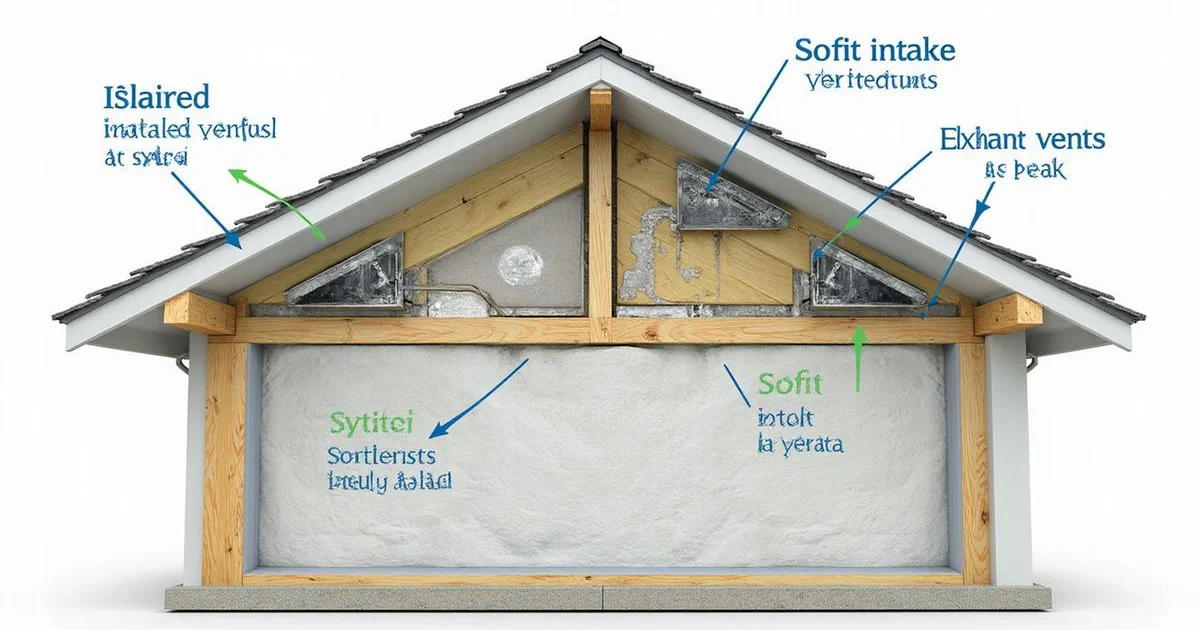
A properly ventilated roof operates on a simple principle: cool air enters the attic through intake vents near the bottom of the roof, and warm, moist air exits through exhaust vents near the top. This continuous airflow regulates attic temperature and removes excess moisture, creating conditions that protect your roofing materials and home structure.
The most effective ventilation system uses soffit vents for intake and a continuous ridge vent for exhaust. This combination creates balanced airflow across the entire underside of the roof deck, leaving no stagnant pockets of air where heat and moisture can accumulate.
Why Ventilation Matters in Winter
For Saratoga Springs homeowners, the winter benefits of proper ventilation are particularly significant. Here is how good ventilation protects your home during our coldest months.
Ice Dam Prevention
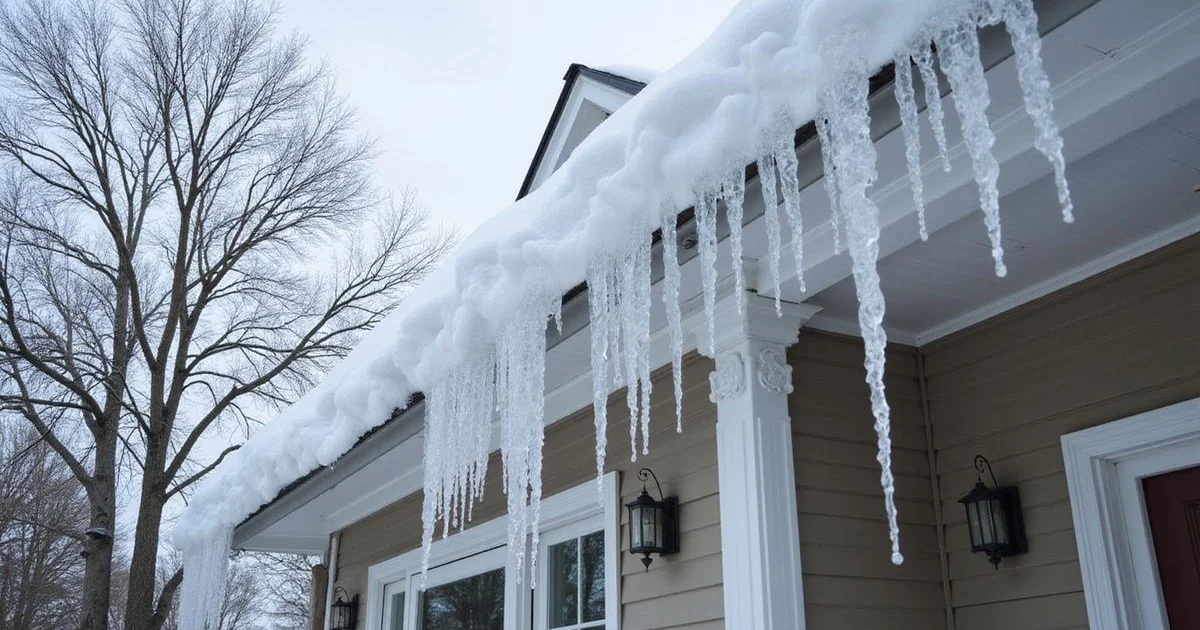
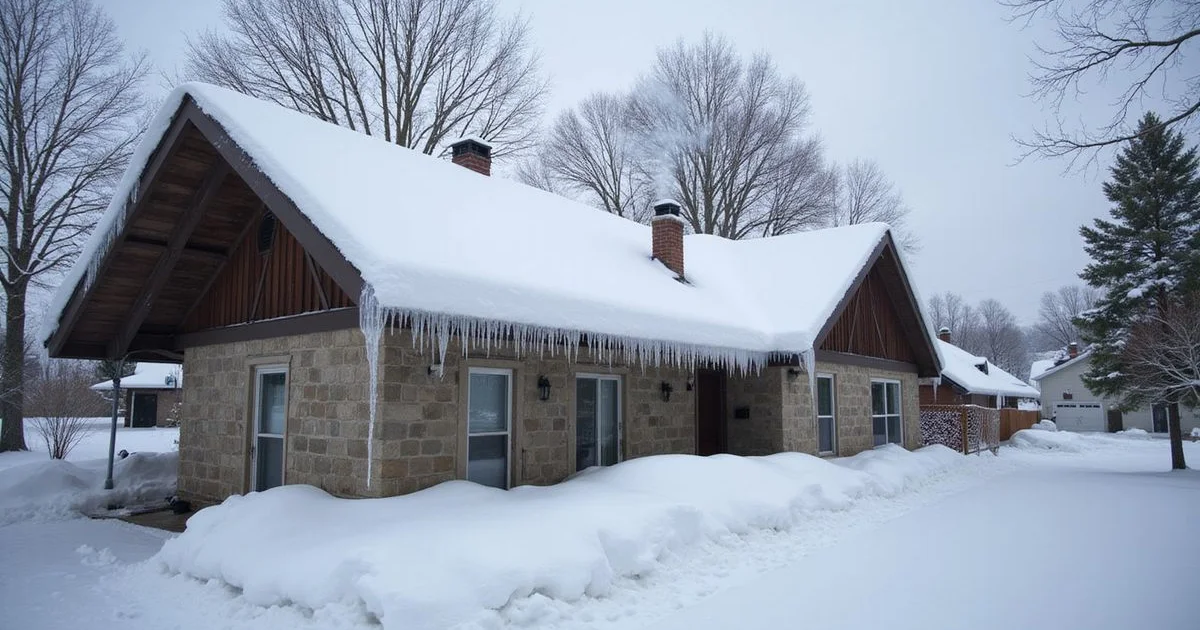
Ice dams are caused by heat escaping from your living space into the attic, warming the roof deck, and melting snow that then refreezes at the cold eaves. Proper ventilation keeps the attic cold by flushing warm air out through the ridge vent before it can warm the roof deck. Combined with adequate insulation, good ventilation is the most effective defense against ice dams.
In our climate, where ice dams are one of the most common and costly roofing problems, the value of proper ventilation cannot be overstated. Homes with balanced ridge and soffit ventilation experience significantly fewer ice dam issues than homes with inadequate ventilation.
Moisture Control
During winter, warm, moist air from your living space naturally rises toward the attic. Without proper ventilation, this moisture condenses on the cold underside of the roof deck, leading to wet insulation, mold growth, and rotting wood. Over time, this moisture damage can compromise the structural integrity of your roof and require costly repairs and create unhealthy air quality conditions in your home.
A well-ventilated attic allows this moisture-laden air to escape before it can condense, keeping the attic dry and the roof structure sound.
Why Ventilation Matters in Summer
Proper ventilation is equally important during the warm months, though for different reasons.
Heat Reduction
On a hot summer day in Saratoga Springs, an unventilated attic can reach temperatures of 150 to 160 degrees Fahrenheit. This extreme heat bakes your shingles from below, accelerating the breakdown of asphalt compounds and dramatically shortening their lifespan, potentially leading to a premature roof replacement. It also radiates heat down into your living space, making your home uncomfortable and forcing your air conditioning system to work harder.
Proper ventilation keeps attic temperatures within 10 to 15 degrees of the outside temperature by allowing hot air to escape through the ridge vent while cooler air enters through the soffits. This reduces the thermal stress on your shingles and lowers your cooling costs.
Energy Efficiency
When your attic stays cooler in summer, your air conditioning system runs less frequently, reducing your energy consumption and utility bills. Studies have shown that proper attic ventilation can reduce summer cooling costs by 10 to 30 percent. In Saratoga Springs, where summer temperatures regularly reach the 80s and 90s, these savings add up over the course of the season.
Signs of Inadequate Ventilation
How do you know if your home’s ventilation system is not performing adequately? Watch for these warning signs:
- Ice dams forming along the roof edge during winter
- Attic feels extremely hot during summer, noticeably hotter than the outside temperature
- Moisture or frost visible on the underside of the roof deck during winter
- Mold or mildew growth in the attic
- Roof shingles curling or deteriorating prematurely, especially on south-facing slopes
- Interior rooms on the upper floor are significantly warmer than lower floors in summer
- Paint peeling on exterior soffits or gable ends
- Musty odors in the upper floors or attic
If you notice any of these signs, your ventilation system likely needs improvement.
Types of Roof Ventilation
Intake Vents
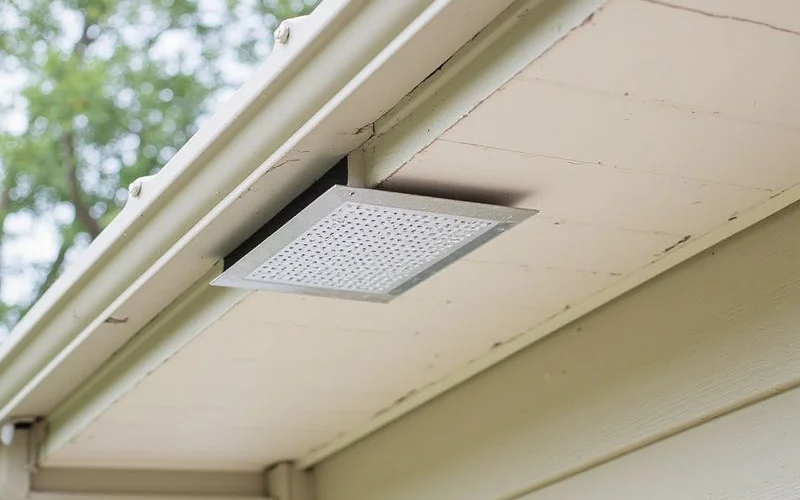
Soffit vents are installed in the underside of the roof overhang (soffit) and provide the intake portion of the ventilation system. They come in continuous strip, individual round, and rectangular configurations. Continuous soffit vents provide the most consistent airflow.
Drip edge vents can be installed where soffit space is limited, providing intake ventilation at the very edge of the roof.
Exhaust Vents
Ridge vents run along the peak of the roof and provide continuous exhaust along the full length of the ridgeline. They are the most effective exhaust vent option and are nearly invisible from the ground when covered with cap shingles.
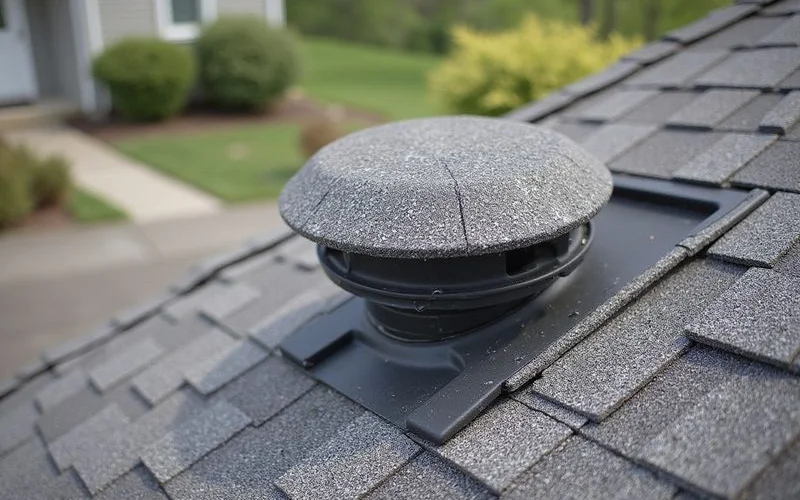
Box vents (also called static vents) are individual vents placed near the ridge. They are less effective than ridge vents because they only ventilate the area immediately around them.
Powered attic ventilators use electric or solar-powered fans to actively pull air through the attic. They can be effective but are generally more expensive to operate and maintain than passive systems.
Gable vents are located in the triangular wall area at the end of a gable roof. They provide limited ventilation and are generally not sufficient as the sole exhaust solution.
The Balanced Ventilation Requirement
The key to effective ventilation is balance. You need approximately equal amounts of intake and exhaust ventilation. The general rule is one square foot of net free ventilation area for every 150 square feet of attic floor space, split evenly between intake and exhaust.
An imbalanced system, such as one with strong exhaust vents but insufficient soffit intake, can actually create negative pressure in the attic that pulls conditioned air from your living space, increasing energy costs and potentially drawing in moisture.
Improving Your Home’s Ventilation
If your Saratoga Springs home has inadequate ventilation, improvement options include:
- Adding or replacing soffit vents with continuous strip vents
- Installing a ridge vent if your home does not have one
- Ensuring insulation does not block soffit vents using baffles
- Removing unnecessary powered ventilators that may conflict with passive systems
- Sealing attic bypasses to reduce the amount of warm air entering the attic
Get a Professional Ventilation Assessment
Rooferly Saratoga Springs can connect you with roofing professionals who specialize in attic ventilation assessment and improvement. A thorough evaluation of your current ventilation system, combined with recommendations for improvement, can significantly extend your roof’s lifespan, reduce ice dam risk, and lower your energy costs. Contact us today to schedule a professional roof inspection.
James Carter is a licensed roofing contractor with over 15 years of experience serving Saratoga Springs and the greater Capital Region.
GAF Master Elite CertifiedNeed Professional Help?
Get matched with trusted local roofers for your project.
Learn About Our Services